

The Chronically Creative Update
It's better, it's worse, it's better, it's worse, it's bett...

Chronic illness doesn’t wait for the perfect time to create — it rewrites the schedule every day. Here’s what’s changed for me this year, what’s gotten worse, what’s gotten better, and how I’m still finding ways to make art through it all.
I really thought I had my chronic illness mapped out, as much as I could. It’s been 3 years since I got Covid, which then turned into long Covid (post-Covid syndrome).
That has surprisingly changed this year. And it’s better and worse and ever changing. Always ever changing.
I haven’t written here for a while because I needed time to process all the new changes. Some good, some bad, some fixable, some permanent. Like the crappiest version of “Red Fish, Blue Fish.” And because for all the creative plans I’ve had this year, most of them have been shifted as I keep trying to wrangle a body that’s not the way
Meet Dysautonomia, My New Unwanted Roommate
Let’s start with the bad first. I finally got the dysautonomia diagnosis and this one hit harder than I expected it to. Dysautonomia is basically POTS (postural orthostatic tachycardia syndrome) without the heart palpitations, but like the name suggests, it’s the dysregulation of the autonomic nervous system. It effects everything, from your brain to your cardiovascular system to your stomach. That’s the only reason I didn’t get a POTS diagnosis, which…is actually something to celebrate. Because I’ve had heart palpitations for 2+ years and somewhere over the last 6 months, year? They stopped at the level I was getting them. No more crazy drops and spikes. I’ve watched my heart rate drop to 37 BPM and immediately spike above 160 BPM.
The piece of dysautonomia that I’ve been struggling with for ages is what’s called orthostatic hypotension. My blood pressure doesn’t keep up with me when I go from laying down to sitting to standing, and I black out a little bit. I just got used to standing up slowly and waiting for my vision to return, and making sure I have my hand on something to remind my body that we should, in fact, keep ourselves upright.
I almost canceled my appointment with my cardiologist because structurally everything is fine and I passed all my tests with flying colors. But I think the truth is I almost canceled that appointment because I was scared and I didn’t want to know the answers; like something in side me already knew that now that the heaviest symptoms are being managed, now I can notice other issues going on. Then my doctor ran the poor man’s tilt table test (which is as barbaric as it sounds): she had me lie flat, then sit up, and then stand.
Had I not been holding onto her arm, I’m pretty sure I would have hit the floor. My blood pressure dropped from 125/82 to 90/65. And because I drink electrolytes daily and add salt to my food, my blood pressure was already artificially inflated, so it’s probably dropping lower. Now I’m on old lady blood pressure medications to keep my blood pressure up and it does help. The problem with low blood pressure is there’s noting cumulative about it; it resets every day. The good news is that I’ll never have to give up salt or caffeine, so win?
But there have been a few surprises. My iron storage tank (ferritin) is running on fumes, but since my hemoglobin’s fine, I don’t get the official anemia label. It just means I’m tired for other exciting reasons. Fixing my ferritin storage meant I felt like utter shit for a solid month. Once you start getting iron in, your body ramps up red blood cell production (which also came back as low), but increasing red blood cell production means I got the worst fatigue of my life within two hours of taking the pill. Unlike ME/CFS, where you just feel like your energy stores are empty, this was “oh my god I can’t stay awake AT ALL” fatigue. The first time I took the iron pill I fell asleep sitting up at my desk, which didn’t even happen during my final grad school semester when I was in the thick of writing my thesis.
It turns out: this seems to be a common thread that happens with people who are chronically ill. If you’re chronically ill, and haven’t had your ferritin checked, you should. It remains to be seen as to whether or not this is fixable in any kind of permanent way, but a month into iron pills, and I can say, I do feel more steady throughout the day. I’m sleeping better and my appetite has increased.
Things That Actually Got Better
It’s not all bad news. Some things have actually gotten better — and they’re worth saying out loud, even if I have to remind myself to see them. My heart palpitations have eased up to the point that they’re mostly gone, and aren’t being triggered by physical activity. Since starting ferritin supplements, I’ve been sleeping better, eating more consistently, and feeling a steadier kind of energy throughout the day. I also started a chronic pain pain management program and it’s making a huge difference, giving me tools I can actually use when my body starts to turn on me. And it’s reminding me that there are options when your autonomic nervous system goes squirrelly. Now I just have extra help reminding my brain that no, there’s not need to freak out.
I’m getting better at catching symptoms before they flatten me, and I’m more mobile during flare-ups than I’ve been in years. There are moments, sometimes just seconds, that feel normal, and they’re happening more often. I’m now up to 6 minutes on the exercise bike most days, and added two weightlifting sets a couple times a week. None of this erases the hard stuff, but it reminds me I’m still moving forward, even if it’s slower than I’d like. I also stopped white-knuckling it through the pain of a chronic fatigue crash, and I have emergency meds when needed.
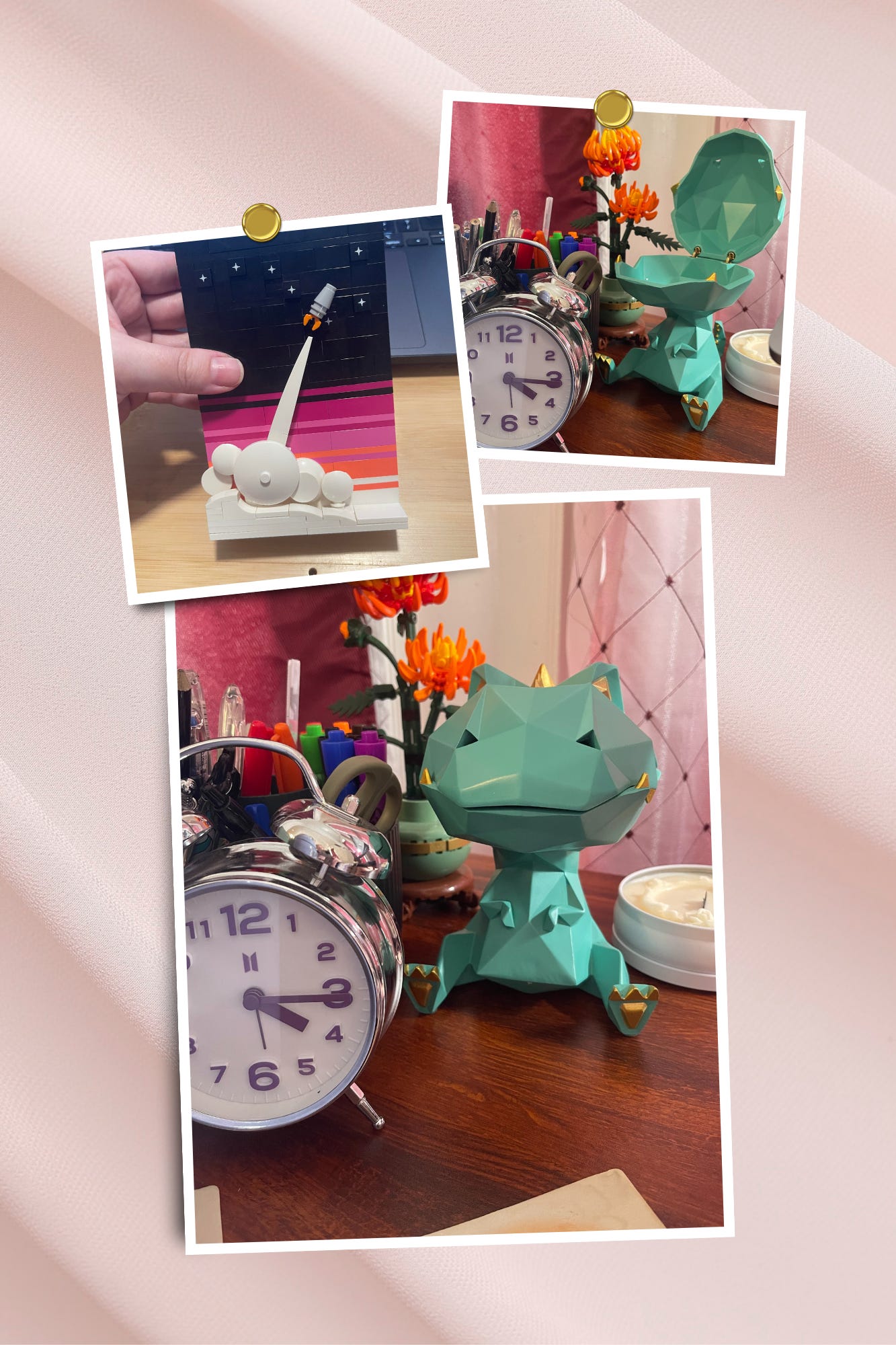
Making Art in the Middle of the Mess
Living with chronic illness and being creative both require the same skill: learning to work with a moving target. You plan, you adapt, you try again. Some days I can build whole worlds on the page. Other days, creativity looks like noticing the light through the window while I’m lying down. This year has been a crash course in making art with the time, energy, and clarity I have — not the time, energy, and clarity I wish I had. If nothing else, it’s proof that creativity isn’t just something you do; it’s something you practice, in whatever way you can, even in the middle of the mess.
Even if I’m not as far ahead as I hoped for 2025, I’m still chipping away at the things that matter to me. Right now that means editing two short stories for submission, moving the novel forward, and showing up for my Korean classes. I’m also building out my business, and I still want to post on Substack more consistently this year. The pace might be slower than I like, but the work is still happening — and that’s what counts.
I know this cycle of creating in the cracks of wellness. Let’s get it where and when we can!